

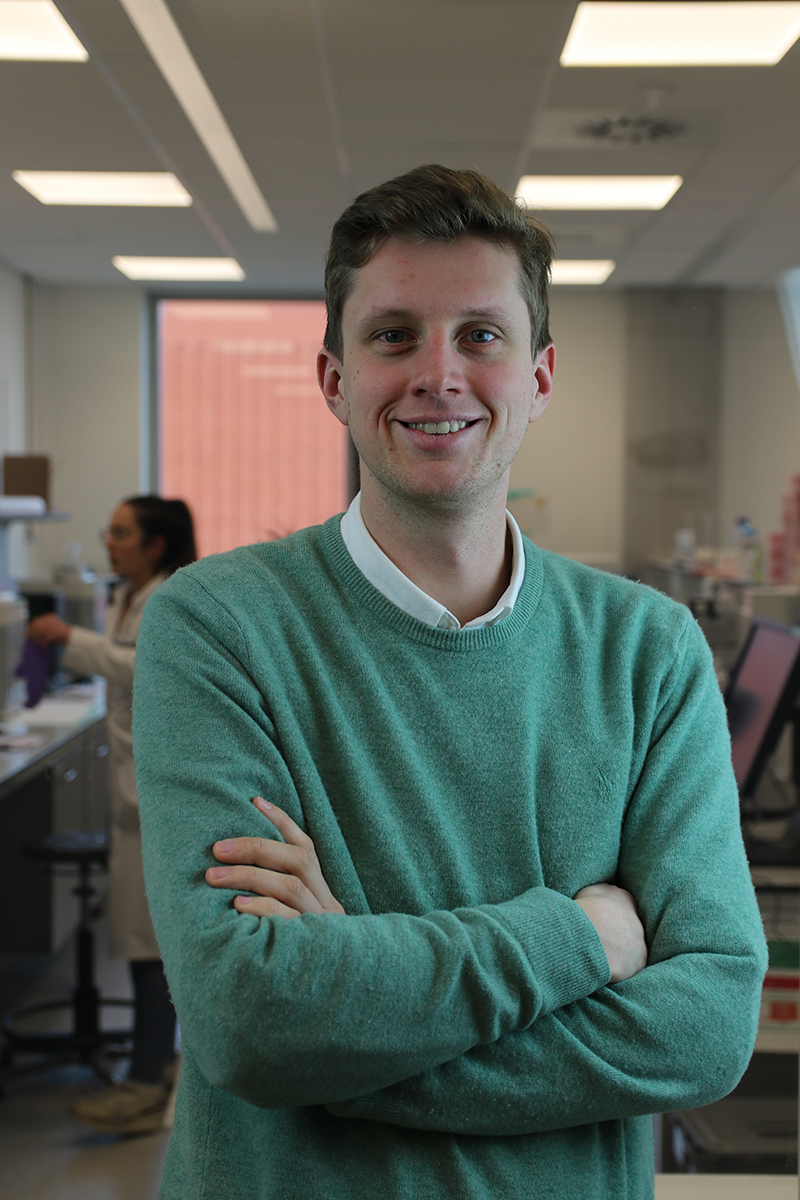
The title of the doctoral dissertation is “Drinking water from source to tap: Unravelling microbiome dynamics through monitoring and novel biological indicators“
The public defence will take place on 22nd October 2026 at 17:00 in the Feestzaal, Auditorium A.1 at Campus Coupure, Coupure Links 653, 9000 Ghent.
A short abstract of the doctoral research
Before drinking water reaches the consumer’s tap, it travels through a complex system of natural and engineered environments, from its original source through treatment plants and distribution networks to household plumbing. Throughout this journey, microbial communities are continuously shaped by environmental conditions, treatment processes, and interactions between microorganisms. Capturing and monitoring these changes is essential for maintaining safe and high-quality drinking water.
This doctoral research investigated how microbial communities change from source to tap, how they respond to environmental and operational disturbances, and how these changes can be monitored more effectively. The results demonstrate that source water characteristics, including nutrient availability and temperature, strongly influence microbial communities and can have effects that persist throughout treatment and distribution. Microbial communities responded to changes in temperature, water composition, nutrient availability, and disturbances such as rainwater backflow. To better capture these dynamics, this research evaluated advanced monitoring approaches, including flow cytometry, metagenomic sequencing, and analysis of the bacterial and eukaryotic communities. These methods provided faster and more detailed information on microbial abundance, diversity, and functional potential than conventional approaches. Overall, this research shows that drinking water microbiology is dynamic and interconnected from source to tap. Combining an ecological understanding of microbial communities with advanced monitoring technologies can improve our ability to detect changes, understand their significance, and support more informed management of drinking water systems.